Cybercriminals are constantly developing new ways to manipulate victims, and one particularly alarming form of fraud is the digital arrest scam. Instead of relying primarily on malicious software or stolen passwords, this scam uses fear, impersonation, social engineering, and psychological pressure to convince victims that they are under investigation or about to be arrested.
Understanding how these scams work is one of the best ways to avoid becoming a victim.
What Is a Digital Arrest Scam?
A digital arrest scam typically begins with an unexpected phone call, text message, WhatsApp message, or video call. The scammer impersonates a police officer, government official, customs officer, bank representative, or other authority figure.
The victim may be told that their identity, bank account, phone number, or identification document has been connected to a serious crime. The alleged offense might involve money laundering, drug trafficking, tax violations, illegal shipments, or suspicious financial transactions.
The scammer then claims that the victim must cooperate with an investigation to avoid arrest.
The critical fact to remember is simple:
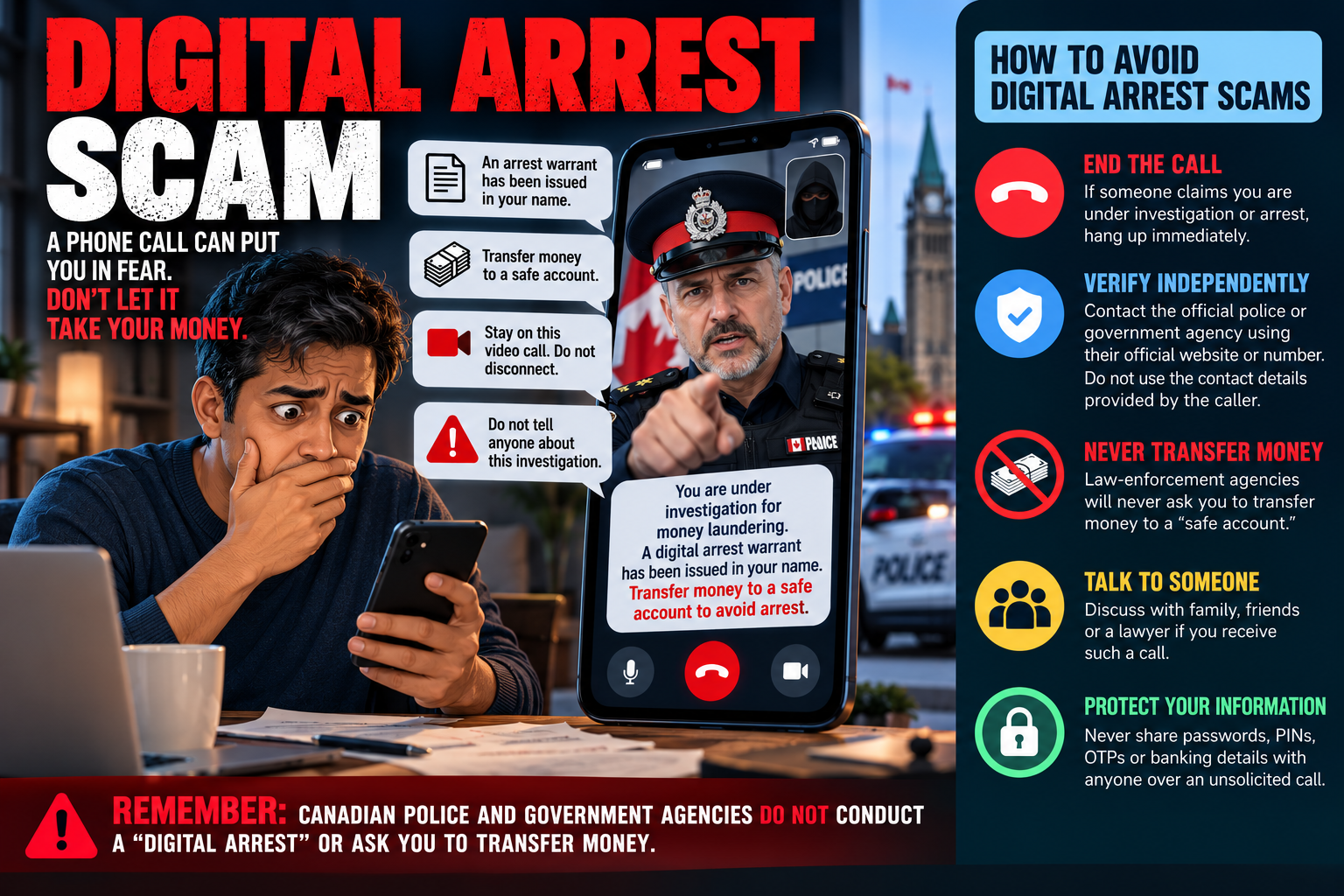
Legitimate law-enforcement agencies do not conduct a so-called “digital arrest” in which you must remain on a video call or transfer money to prove your innocence.
How the Scam Works
Digital arrest scams rely heavily on social engineering. Criminals may already possess information such as your name, phone number, email address, or other details obtained from data breaches, social media, or previous scams.
They may use this information to make their story sound convincing.
Scammers can also use caller-ID spoofing, fake identification cards, forged documents, realistic-looking offices, prerecorded messages, and video conferencing to create the appearance of an official investigation. Increasingly, AI-generated voices, images, and other forms of synthetic media can make impersonation attempts even more convincing.
The scammer then creates urgency. You may be instructed not to disconnect the call, contact relatives, speak with your bank, or discuss the supposed investigation with anyone.
Eventually, the criminal demands money. They may describe it as a security deposit, verification transaction, fine, bail payment, or temporary transfer to a “safe account.”
There is no safe account. The money is being transferred to criminals.
Warning Signs
Be extremely cautious when someone unexpectedly contacts you and:
- Claims that you are under investigation or facing immediate arrest.
- Demands that you remain continuously connected by phone or video.
- Tells you not to contact family members, your bank, a lawyer, or local police.
- Requests money to cancel an arrest warrant or prove your innocence.
- Asks you to transfer money to a “safe,” “government,” or “verification” account.
- Demands cryptocurrency, gift cards, wire transfers, or other difficult-to-reverse payments.
- Sends supposed warrants, identification cards, court documents, or police reports through messaging applications.
- Pressures you to act immediately and discourages you from independently verifying the situation.
- Requests passwords, PINs, one-time passwords (OTPs), security codes, or banking credentials.
The combination of authority + fear + secrecy + urgency + payment is a major indication of fraud.
How to Protect Yourself
If you receive such a call, do not panic and do not transfer money.
End the conversation. Do not use a telephone number, website, email address, or contact information supplied by the caller. Instead, independently locate the official contact information for the organization the person claims to represent.
Contact the relevant police department, government agency, financial institution, or other organization directly and verify the claim.
Never provide passwords, banking PINs, authentication codes, or other security credentials to an unsolicited caller. Enable multifactor authentication on important accounts and use strong, unique passwords.
You should also limit the amount of personal information publicly available through social media. Details about your family, workplace, travel, telephone number, or financial activities can sometimes help criminals construct more convincing stories.
What If You Already Sent Money?
Act immediately.
Contact your bank or financial institution and explain that you were the victim of fraud. Ask whether the transaction can be stopped, recalled, or frozen.
Change passwords for any accounts that may have been exposed and review your financial accounts for suspicious activity. If you disclosed authentication information, contact the relevant service providers immediately.
Save evidence such as phone numbers, screenshots, messages, emails, payment receipts, account information, and copies of documents sent by the scammers. Report the incident to the appropriate law-enforcement and fraud-reporting authorities in your country.
Be cautious of anyone who subsequently claims they can recover your stolen money for an upfront payment. Recovery scams frequently target people who have already been victimized once.
The Most Powerful Defense: Stop and Verify
Digital arrest scams succeed because criminals try to prevent victims from having enough time to think.
If someone claiming to represent an authority suddenly demands secrecy, immediate action, or money, stop communicating with them and verify the situation independently.
A genuine authority does not need you to transfer your savings to a mysterious “safe account” to establish your innocence.
Cybersecurity is not only about firewalls, antivirus software, and strong passwords. It is also about recognizing when someone is attempting to manipulate you.
When fear creates urgency, slow down.
Disconnect. Verify. Report.
Those three actions can prevent a frightening phone call from becoming a devastating financial loss.

